In 2026, Dubai’s industrial landscape stands as a model of innovation and economic resilience. Two destinations have come to define that strength: Dubai South and Dubai Industrial City (DIC). Both serve as strategic pillars in Dubai’s long-term industrial vision, each promoting a distinct business ecosystem.
As the emirate moves toward becoming a global hub for advanced manufacturing and logistics, the competition for prime industrial real estate grows intense.
According to industrial reports, average warehouse occupancy across Dubai’s key logistics zones has surpassed 95%. That means securing the right facility early is not just an opportunity, it’s a necessity. For organisations choosing between aviation-led speed and rail-connected scale, understanding what sets Dubai South and DIC apart may well define operational success.
Dubai South: The Aviation & E-Commerce Pulse
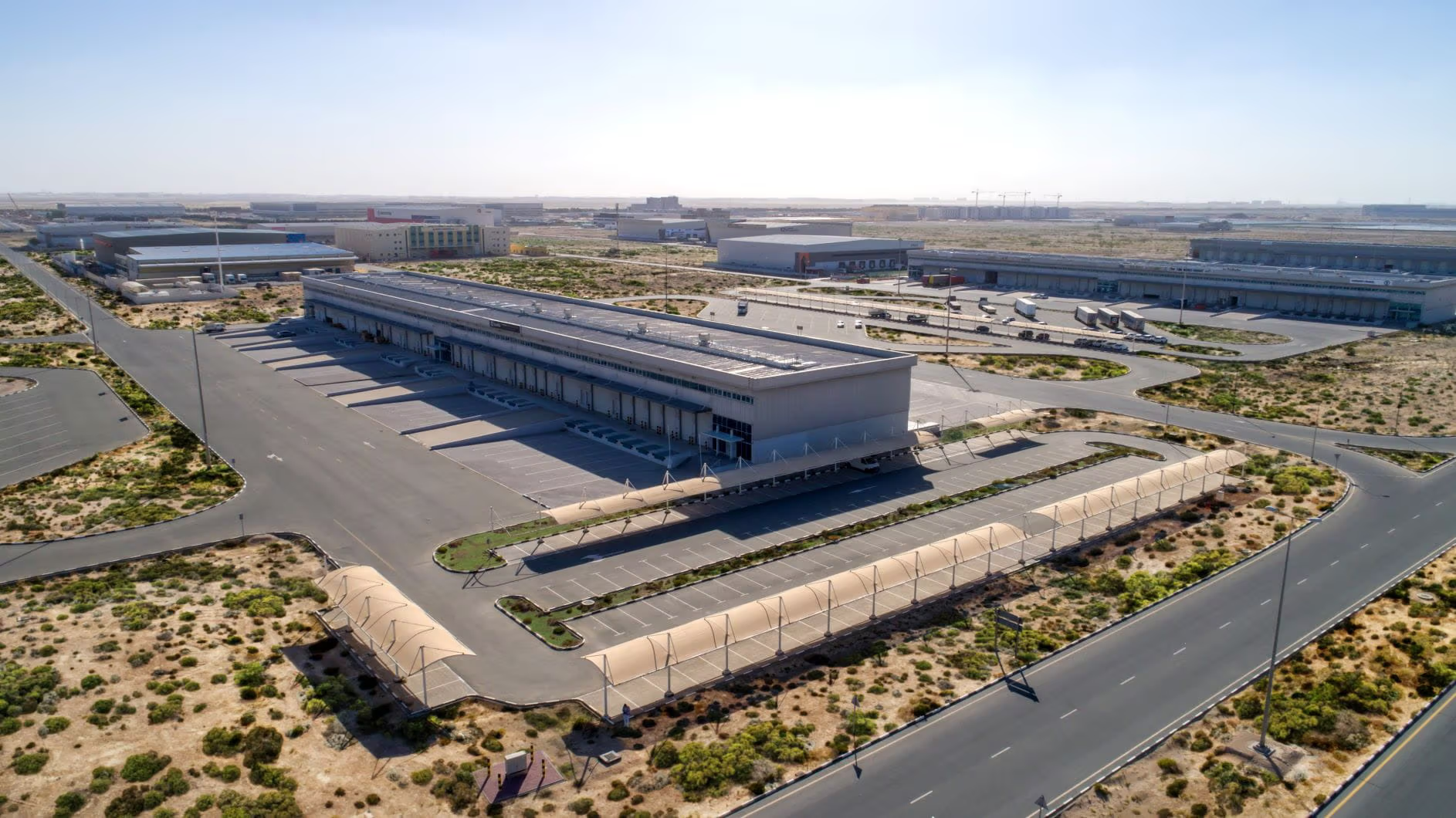
Few places reflect the future of logistics better than Dubai South. Anchored around Al Maktoum International Airport, the district was designed to move goods as seamlessly as ideas. Every road, warehouse, and airstrip connects to a shared goal: faster delivery, easier trade, and frictionless global access. This focus has made Dubai South the preferred base for giants such as Amazon, DHL, and Emirates SkyCargo.
Its advantage begins with location. Sitting between Jebel Ali Port and Al Maktoum Airport, the area gives instant access to both sea and air freight corridors. This unique air‑sea integration reduces last mile delivery cost by 40%. Businesses relying on high‑velocity fulfilment from electronics distributors to pharmaceutical suppliers find the Dubai South logistics network unmatched for efficiency.
Beyond access, flexibility defines the Dubai South warehouse for rent market. Many units are ready‑to‑move, fully fitted, and often include built‑in offices. Tenants benefit from adaptable lease terms, simplified customs procedures, and immediate access to the Dubai South Free Zone, where trading and warehousing operate under a single licence. Streamlined documentation helps goods clear within hours, not days.
For enterprises balancing cost against speed‑to‑market, this ecosystem is shaped around time; every process, from aircraft landing to last‑mile dispatch, happens on a single connected platform.
Check out our detailed area guide on Dubai South to understand the Dubai South for commercial usage including its returns, types of properties, and more. The guide breaks down complex area information into digestible bits so you can make an informed decision!
Dubai Industrial City (DIC): The Manufacturing Powerhouse
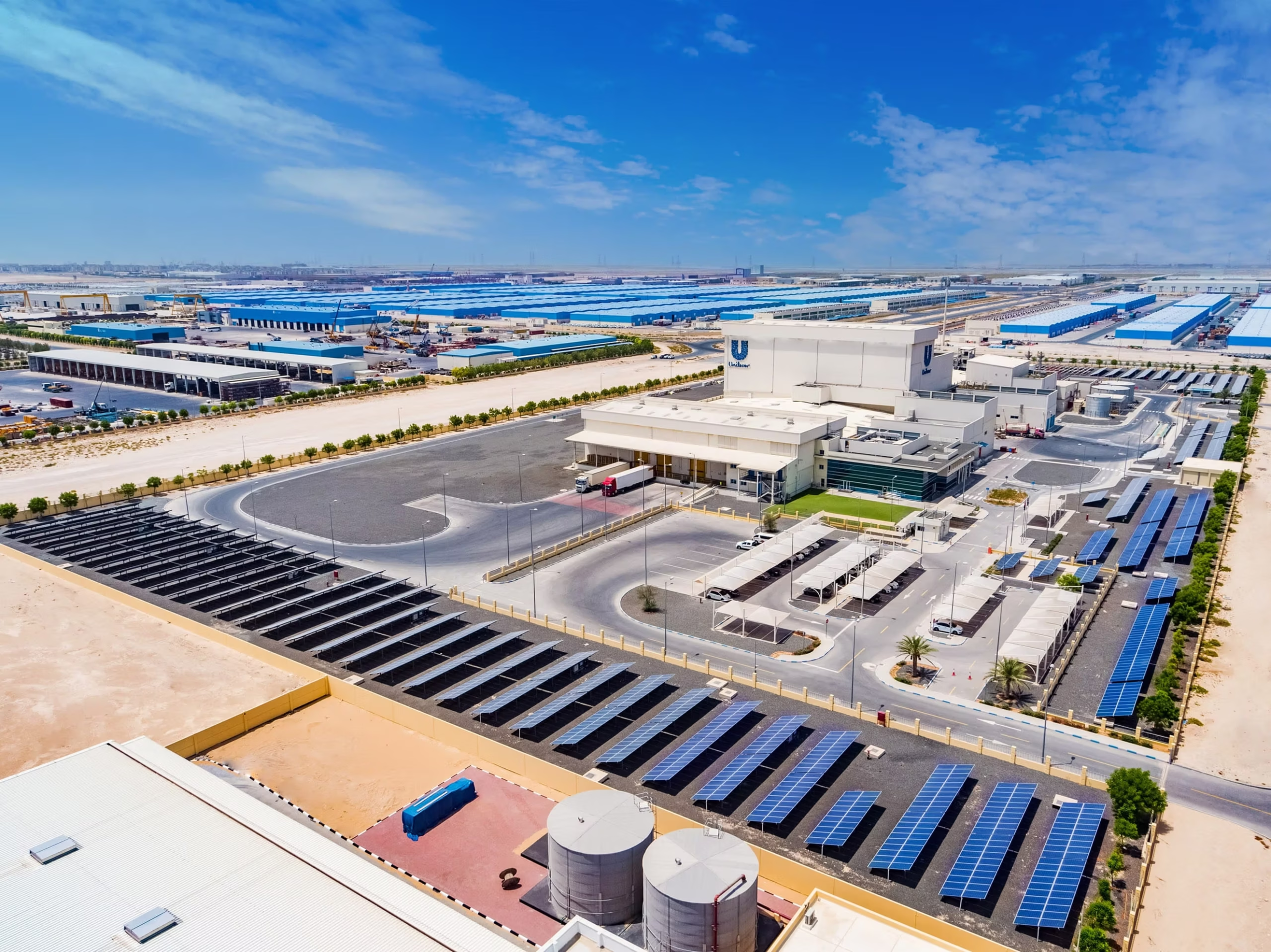
While Dubai South thrives on movement, Dubai Industrial City builds on structure and scale. Established as one of the region’s largest integrated industrial complexes, DIC covers over 55 square kilometres of master‑planned land dedicated to manufacturing, F&B processing, automotive, and metals. Linked directly to the Etihad Rail, it gives producers a cost‑efficient alternative to air freight, connecting Dubai to Abu Dhabi, Al Ain, and the Saudi border.
This rail‑led connectivity offers measurable advantages. According to The National, freight transport by rail can cut logistics costs by 30% and carbon emissions by nearly 80% compared with road haulage. For manufacturers distributing bulk goods, that’s a decisive factor.
The DIC warehouse for rent market caters to businesses seeking scale and infrastructure rather than immediate throughput. Facilities come as custom‑built units or industrial land plots, ideal for assembly lines or heavy utilisation. The city also houses dedicated food and halal clusters, certified by Dubai Municipality, attracting regional F&B brands and export‑driven producers.
What truly sets DIC apart is its sustainable design. Solar power grids, wastewater‑treatment systems, and green zoning align with Dubai’s Clean Energy Strategy 2050. Sustainability is no longer an afterthought it’s a growth catalyst for companies embracing global ESG standards.
Discover how to secure the right industrial space seamlessly by reading our latest blog, “Basics of Warehouse Licensing in Dubai,” and gain the clarity you need before choosing between Dubai South and Dubai Industrial City.
Quick Glimpse: Dubai South Vs. Dubai Industrial City
| Feature | Dubai South | Dubai Industrial City (DIC) |
| Connectivity | By Air (Al Maktoum Airport) and Sea (Jebel Ali Port) | By Rail (Etihad Rail Network) and Road |
| Core Focus | Logistics, E‑commerce, 3PL Distribution | Manufacturing, Heavy Industry, Food & Beverage |
| License Type | Free Zone | Free Zone & Mainland |
| Warehouse Type | Ready‑to‑occupy logistics units | Build‑to‑suit industrial plots and heavy‑duty warehouses |
| Occupancy Rate (2025) | 96% | 94% |
| Tenant Profile | Global 3PLs, E‑Retailers, Air Cargo Firms | Manufacturers, F&B Producers, Engineering Firms |
The contrast is clear: Dubai South is built for speed, while DIC is built for strength. Choosing between them depends on whether your business measures success in minutes or in tonnes.
Explore wider opportunities across the city by reading our latest blog, “Top 6 Locations to Rent Warehouses in Dubai,” and discover which industrial zones offer the best value beyond Dubai South and Dubai Industrial City.
2026 Rental Snapshot: Market Momentum
Industrial rents across Dubai continue to climb, reflecting sustained foreign investment and limited supply. CBRE’s 2025 Industrial & Logistics Report noted a 12–15% rise in average rental rates year‑on‑year, driven largely by e‑commerce expansion and manufacturing diversification.
In Dubai South, premium logistics warehouses typically range between AED 40–55 per sq ft annually, depending on proximity to the airport and degree of fit‑out. These facilities often attract occupiers prioritising ready‑made infrastructure and real‑time connectivity.
By contrast, warehouses in Dubai Industrial City average AED 30–40 per sq ft, and can be customised for specialised operations. Investors tend to appreciate the lower entry cost and the flexibility of large‑scale configurations that support production growth.
Even with rising prices, demand has outpaced new supply. Both government agencies and private developers are responding with modular park expansions and digital leasing platforms designed to keep industrial investment fluid and transparent.
Explore strategic business hubs beyond industrial zones by reading our latest blog, “Top 6 Locations to Rent an Office in Dubai,” and discover where your next corporate base should be.
Decision Matrix: Which Hub Fits Your Business?
The right choice depends on what you produce, how fast you move it, and who your customers are.
| Business Objective | Better Choice | Rationale |
| Faster order fulfilment | Dubai South | Direct airport access and integrated logistics platforms |
| Bulk production | DIC | Rail connectivity for heavy goods and lower operational cost |
| Advanced manufacturing | DIC | Purpose‑built clusters with high‑power utilities |
| Tech‑driven 3PL services | Dubai South | Smart warehousing with digital inventory control |
| Green operations | DIC | Sustainable infrastructure aligned with ESG goals |
Businesses whose lifeline is turnaround speed gravitate toward Dubai South. Those seeking scale, land depth, and infrastructure resilience usually choose DIC. The two are not competitors so much as complementary components of Dubai’s industrial ecosystem.
Before finalising your industrial move, read our latest blog, “10 Concepts You Need to Understand Before Renting Commercial Property in Dubai,” to make confident, informed investment decisions.
2026 Market Trends: What’s Changing?
Modular Warehousing Gains Ground In Dubai South
A notable transformation sweeping Dubai South is the rise of modular warehousing parks. These pre‑engineered units allow faster build times and scalable footprints without requiring full‑scale construction. As reported by Knight Frank (2025), modular facilities can reduce project delivery times by 40%. This trend benefits small‑to‑medium logistics providers who need quick entry but also want the flexibility to expand later.
Smart Manufacturing Accelerates In DIC
Meanwhile, AI‑enabled “smart manufacturing” is redefining productivity in DIC. Automated robotics, sensor‑driven maintenance, and real‑time performance analytics are transforming production lines into insight‑driven ecosystems.
The UAE’s Ministry of Industry estimates that smart automation could boost industrial efficiency by 30% before 2030. Coupled with DIC’s integrated utilities and rail network, this shift positions Dubai as the region’s manufacturing innovation hub.
Gain deeper market insight by reading our latest blog, “Basics to Know Before Buying Commercial Property in Dubai – Chestertons MENA” and understand the essential factors driving smart investment choices.
Conclusion & Expert Insight
The evolution of industrial warehousing in Dubai reflects the emirate’s broader ambition to bridge global trade and future technology. Whether your goal is rapid fulfilment or expanded production capacity, both Dubai South and Dubai Industrial City offer dependable long‑term value.
At the strategic level:
- Choose Dubai South if your model thrives on speed‑to‑market, near‑instant distribution, or third‑party logistics.
- Choose DIC if your success depends on scale, cost‑control, and access to integrated supply networks.
For detailed investment evaluation and tailored advisory, enterprises can request a Location ROI Audit from Chestertons MENA experts to identify which zone best aligns with their logistical and financial priorities.
Looking to buy a warehouse in Dubai? Contact our specialists! At Chestertons MENA, our specialists conduct Location ROI Audits to align your warehouse choice with real financial outcomes. Fin your ideal warehouse in Dubai South with our agents at Chestertons MENA!
- Read time
- 5 minutes